
January
Winter Confit Duck with Red Cabbage and Red Wine Jus
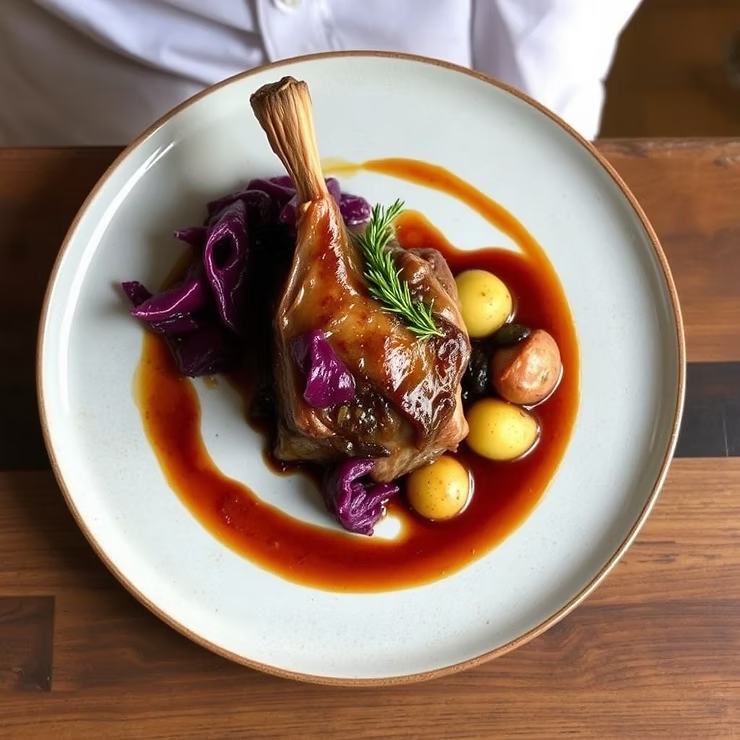
On cold, grey January days in Suffolk, this is exactly the kind of plate I want to place in front of people: confit duck with braised red cabbage, tiny potatoes and a rich red wine jus. It looks elegant, but it is all about warmth and comfort.
The duck leg is slowly cooked until the meat is soft and flavourful, then finished in a hot oven so the skin becomes thin and crisp. When you cut into it, the meat falls away from the bone and soaks up the glossy jus on the plate. The purple cabbage brings colour and brightness – gently braised until tender, with a little sweetness and acidity to balance the richness of the duck. The small salted potatoes are simple on purpose: just-cooked, buttery and smooth, the perfect sponge to catch every drop of sauce.
I love serving this as a family or small‑gathering dish in January because most of the work is done ahead. The duck can rest, the cabbage can wait quietly on the stove, the jus can be warmed just before you eat. When your guests arrive from the rain and fog outside, all you need to do is roast, plate and bring this one beautiful, generous plate to the table.
Lentil Soup
Here’s to many shared meals, new friendships, and delicious memories ahead. 🍽️✨

A Private Chef’s Guide to a Stress‑Free Winter Supper with Lentil Soup at the Heart
January in Suffolk has been all rain, grey skies and cold evenings – the kind of weather that makes you want something warm, simple and deeply comforting. For my guests this season, that has often meant one thing: a big, generous pot of lentil soup.
This isn’t a fancy, fussy dish. It’s easy, tasty, and exactly what people crave when they step in from the rain. In this guide, I’m sharing how I build a relaxed, stress‑free winter supper around my lentil soup, so you can enjoy the same feeling at home.
Why Lentil Soup Is Perfect for a Winter Supper
For a stress‑free evening, the main dish needs to work with you, not against you. My lentil soup does exactly that:
It can be made ahead and gently reheated.
It actually tastes better after resting, as the flavours deepen.
It works for different dietary needs – naturally comforting, filling and adaptable.
It feels humble and homely, but still special when served with the right accompaniments.
On cold, rainy January nights, guests often arrive wrapped in coats and scarves. A steaming bowl of lentil soup is like a warm welcome in a bowl – it relaxes shoulders, slows the pace, and sets the tone for an unhurried evening.
Building the Plate: How I Serve My Lentil Soup
At the centre of this winter supper is a generous bowl of LENTIL SOUP served with:
Flat warm bread – perfect for dipping and wiping the bowl clean.
Flat parsley – finely chopped and scattered on top for freshness and colour.
Pickled green chillies – a little sharp heat to cut through the creaminess of the lentils.
A lime wedge – this is the secret. A gentle squeeze over the bowl lifts everything and really brings out the flavour of the lentils.
That final squeeze of lime is what guests often comment on. It brightens the soup, wakes up the spices and makes each spoonful feel lighter and more vibrant, even on the heaviest winter evening.
Stress‑Free Hosting: How I Plan the Menu
A winter supper shouldn’t leave you exhausted in the kitchen. When I cook this menu for clients, I focus on three principles: make ahead, keep it simple, and build in little moments of generosity.
1. Do most of the work in advance
Prepare the lentil soup earlier in the day (or even the day before).
Warm the flat bread just before serving.
Have the parsley chopped, chillies pickled and lime wedges ready in small bowls.
This way, when guests arrive, you’re not rushing – you’re simply reheating, garnishing and serving.
2. Let the table do some of the work
I often serve the garnishes in small dishes on the table so guests can help themselves:
A bowl of chopped flat parsley
A dish of pickled green chillies
A plate of lime wedges
A basket of warm flat bread wrapped in a clean cloth
This creates a relaxed, sharing atmosphere and makes everyone feel involved in finishing their own bowl.
3. Keep the rest of the menu simple
With such a satisfying main, you don’t need complicated extras. You might add:
A light, crisp salad with seasonal leaves and a bright dressing, or
A small dish of roasted seasonal vegetables if you’d like a bit more on the table.
Think of everything as layers of comfort, rather than lots of separate “courses” to manage.
Little Details That Make a Big Difference
When I’m cooking this winter supper for clients, I pay attention to the details that make an evening feel calm and looked‑after:
Warm bowls – gently warmed before serving so the soup stays hot longer.
Soft lighting and candles – to make the room feel cosy, even if it’s pouring outside.
Unhurried pacing – no rushing to clear plates; guests set the rhythm of the evening.
Quiet care for dietary needs – adapting toppings or spice levels without making anyone feel singled out.
These are all things you can do at home too, even without a private chef.
Bringing Restaurant Calm into Your Home
My role as a private chef in winter isn’t just to cook; it’s to remove pressure. A menu like this – centred on a beautiful lentil soup with warm flat bread, fresh herbs, pickled chillies and lime – lets you enjoy that feeling in your own kitchen.
You can prepare most of it ahead, serve it casually at the table, and spend the evening where you belong: with your guests, not stuck by the stove.
January – Slow-Cooked Comfort: Braised Beef for Cold, Wet Suffolk Days
Share how you turn a foggy, rainy January day into a warm family moment with your slow-cooked braised beef: choosing the right cut, letting time do the work, and serving it simply with mash and winter greens.

“On cold, wet January days in Suffolk, I always think in layers: warm socks, soft jumpers, and a big pot of food that can feed everyone with almost no stress. This dish was born from that feeling. I wanted something that felt like a proper family meal, but without endless chopping, last‑minute panic, or lots of pots to wash.
I start with simple, honest ingredients – good seasonal vegetables, a few aromatics, and a base that loves to simmer slowly while you get on with your day. Most of the work happens at the beginning: a bit of peeling, a gentle sizzle of onions and garlic, then everything goes into one pan to cook together. After that, time does the job. The flavours melt, the sauce thickens, and the kitchen slowly fills with that ‘come and sit down’ smell.
This is the kind of January meal you can prepare in the morning, leave to bubble softly, and then forget about until everyone is hungry. It keeps well, tastes even better the next day, and is easy to warm up when family members arrive at different times. For me, that is real comfort: not just the food itself, but how calm and simple it is to bring it to the table. A big dish in the centre, a ladle, warm plates, and people helping themselves – that is my favourite way to start the year.”
If you tell me which exact dish you have on the page (for example stew, bake, traybake, pasta), I can add one short paragraph that describes it in detail.
slow cook braised beef
Perfect, let’s add a short, clear paragraph about your slow‑cooked braised beef, in the same tone:
“This slow‑cooked braised beef is my answer to a grey January day. I choose a humble cut that loves time, sear it until it is dark and caramelised, then let it sink into a deep sauce of onions, garlic, herbs, and stock. After that, the oven or hob does the work. The meat softens slowly, the fibres relax, and after a few hours you can pull it apart with a fork. I like to serve it with creamy mashed potatoes and simple winter greens, so the rich sauce can run into the mash and every bite feels warm and generous. It looks impressive on the table, but it is secretly very low‑stress – perfect for a family meal when the weather outside is cold, wet, and foggy.”


Comments